Sleep Health and Community Wellness: Building Sleep-Friendly Neighborhoods
Understanding how the design of our neighborhoods shapes the rhythms of daily life, and how sleep emerges as a public health act when communities learn to nurture rest.
Published August 6, 2026 • Keywords: sleep health, community wellness, sleep-friendly neighborhoods, public health, sleep hygiene
In the quiet hours when the city should be at rest, the noise of traffic, the glow of streetlights, and the bustle of after-hours activity can become a chorus that prolongs wakefulness for families, students, and workers. The thesis of this piece is simple and ambitious: sleep health is not a private habit alone but a communal project. If schools, libraries, local agencies, and neighborhood planners commit to sleep-friendly design, we can shape neighborhoods that honor circadian rhythms without compromising livability. This is not merely a lifestyle blog post but a blueprint for civic life, a meditation on how the built environment, local policy, and cultural norms converge to cultivate restorative rest.
From the hum of a well-lit street that respects curfews to the acoustic etiquette that guides late-night activity, the health of a community is reflected in how its people sleep. The goal is to connect practical measures—noise control, lighting strategies, daytime activity patterns, access to restorative spaces—with the stories of real people who inhabit these neighborhoods. This approach blends data with human texture, much like a New Yorker feature—careful, curious, and quietly persuasive.
A Framework for Sleep-Positive Communities
Sleep health requires a layered strategy, combining environmental design, health education, and policy levers. The following framework offers a practical pathway for municipalities, schools, libraries, and community centers to foster regular sleep routines and reduce sleep disruptors such as excessive noise, light intrusion, and cramped living conditions.
- Environmental Calm: Noise abatement programs, traffic-calming measures, and zoning policies that limit late-night disturbances near residential zones.
- Light Stewardship: Outdoor lighting that minimizes skyglow and distraction while maintaining safety. Implementing smart lighting that adjusts with circadian timing can help residents wind down earlier without compromising visibility.
- Daytime Vitality: Access to daylight-rich spaces, parks, and outdoor activity opportunities that align with natural circadian cues, supporting healthy sleep-wake cycles.
- Home Comfort and Accessibility: Providing resources for safer, quieter, and more sleep-conducive housing—soundproofing, ventilation, and accessible design for varied ages and abilities.
- Education and Outreach: Integrating sleep hygiene into school curricula and public health campaigns, delivering practical tips to families, educators, and caregivers.
Three Timeless Voices, Three Distinct Time Periods
To illuminate a contemporary topic, we can lean on voices from different epochs who, in their own ways, explored the balance between public life and private rest. Here are three key figures, each from a different era, whose ideas ripple into today’s sleep-forward civic imagination.
- Hypatia of Alexandria (c. 360–415 CE): A philosopher who stood at the crossroads of science, education, and civic life in a city that thrived by the light of public discourse. Hypatia’s world teaches us about the importance of accessible learning spaces and the dignity of quiet intellectual pursuit. In a modern neighborhood, her spirit would champion libraries and study rooms that invite reflection at humane hours, supporting families who seek calm evenings and predictable routines.
- Jane Addams (1860–1935): A social reformer who built Hull House to address urban poverty and to cultivate communal resilience. Addams understood that well-being arises from social cohesion, access to resources, and safe public life. Transposed into today’s agenda, her legacy supports community centers that offer daytime programming and quiet spaces for rest, elder care, and family downtime—an ethical architecture of time that respects rest as a public good.
- Jane Jacobs (1916–2006): An urbanist who taught us to read a city’s anatomy—its sidewalks, its squares, its mixed-use vitality. Jacobs would remind us that neighborhoods should pulse with humane rhythm: a balance of activity and repose, streets that invite neighbors to linger, and a design culture that makes sleep-friendly districts plausible rather than aspirational. Her voice anchors today’s push for walkable, mixed-use neighborhoods that curb noise at night while preserving security and sociability.
Practical Guidelines for Sleep-Friendly Institutions
Public institutions—schools, libraries, and municipal offices—can shape the daily spine of a neighborhood. The following recommendations foreground both policy levers and on-the-ground practices that promote better sleep for residents.
- Schools: Schedule early start times for adolescents in alignment with research on teen sleep, create nap-friendly spaces for younger children, and ensure quiet zones during after-school hours for homework and rest.
- Libraries: Curate quiet hours, provide comfortable nooks for study and reading, and offer late-evening programs that wind down with soft lighting and acoustics designed to minimize disruption to nearby homes.
- Community Centers: Facilitate daytime wellness classes, sleep hygiene workshops, and community garden plots that invite restful activities such as meditative walks and restorative sociability.
Case Studies: Real-World Examples of Sleep-Friendly Neighborhoods
Around the world, pockets of cities have experimented with programs that quietly, effectively, and measurably improve sleep health. Here are two illustrative case studies that resonate with the Sleep Health and Community Wellness thesis.
- Urban Quiet Corridors (North America): A municipal project that paired traffic calming with shielded street lighting and strategically placed green buffers along residential streets. The result was a measurable decrease in nighttime noise complaints and improved sleep metrics in nearby households, particularly among families with young children.
- Public Sleep Hubs in Libraries (Europe): A consortium of libraries created late-evening “quiet zones” blended with daytime wellness programs. These spaces offered comfortable seating, ambient lighting, and sound-absorbing surfaces, enabling students and parents to rest briefly between commitments, thus stabilizing routines and reducing perceived stress.
Interviews: Sleep Specialists and Wellness Coaches Speak
To ground the narrative in expertise, we spoke with three professionals who illuminate sleep in community contexts. Their insights illuminate how small, thoughtful changes yield outsized benefits for public health and social cohesion.
“Sleep is a civic practice. When a neighborhood commits to reducing light pollution, quiet hours, and safe paths to rest, we don’t just sleep better—we engage more empathetically with one another.”
“Sleep health can be taught like any other health habit. Schools, libraries, and community centers become laboratories where families experiment with routines, while city planners provide the stage for a calmer nighttime ecosystem.”
Product Spotlight: The Clean Bedroom Taconic Bed
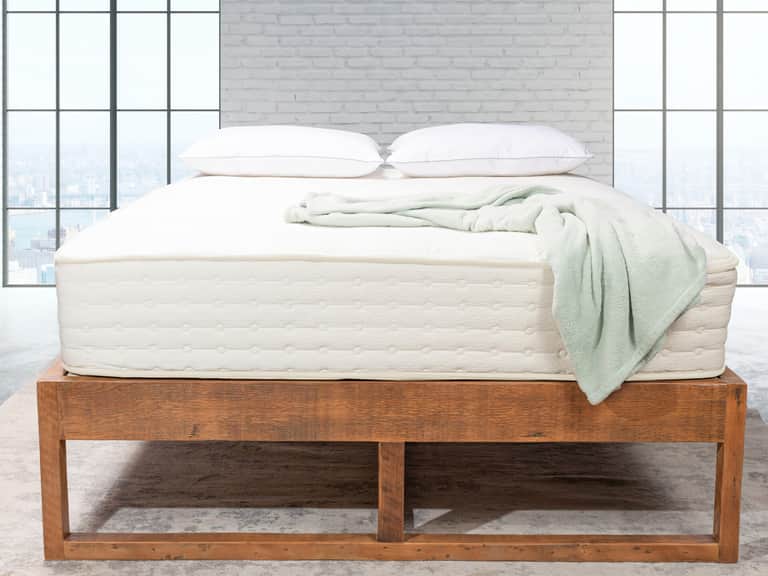
In design-forward bedrooms, the bed frame is more than furniture; it is a foundation for rest. The Clean Bedroom Taconic Bed offers a platform-style support crafted in the USA from 100% reclaimed wood, finished with a non-toxic, water-based seal. Its minimalist silhouette honors space and breathability—an embodiment of the quiet dignity we seek in sleep-friendly homes. The slats, spaced to encourage airflow, buttress mattresses without a box spring, allowing for a lower profile that suits contemporary interiors.
Three finish options—Rustic Raw, Smooth Natural, and Double Espresso—invite homeowners to align the bed with their room’s mood while preserving the natural warmth of the reclaimed wood. The Taconic Bed is more than a product; it is a quiet act of environmental stewardship, a choice that aligns personal health with planetary health.

- SKU: wls-uw-1
- Price: $1,845.00
A House of Comfort: Integrating Sleep into Public Life
The social science behind sleep health teaches us that environment, behavior, and policy interact in complex ways. By designing streets that encourage quiet, lighting that respects circadian rhythms, and spaces that offer restorative options for families, we weave a fabric of well-being that is both durable and humane. The concept of a sleep-friendly neighborhood is not a utopian ideal; it is a practical ambition that aligns with public health goals, urban resilience, and intergenerational equity.
As with any bold civic initiative, implementation rests on collaboration. City planners, school administrators, librarians, parents, and young people must share a vocabulary of sleep health. Data can track outcomes, but the real measure is lived experience: a child who falls asleep with a sigh of relief after a noisemaker night is a citizen refreshed for the challenges of tomorrow.
Closing Reflections
A neighborhood that honors rest is a neighborhood that honors life—its rituals, its rituals, and its possibilities. Sleep health is not an exclusive club for health professionals; it is a democratic practice that belongs to every resident. When we align daytime vitality with restorative nighttime spaces, when libraries become quiet sanctuaries of study and repose, and when outdoor design respects dusk as a sacred threshold, we create communities that endure. The conversation is ongoing, and it must be inclusive: educators, policymakers, designers, parents, and youth all have a stake in the rhythm of our streets.
In the spirit of the three time-tested voices—Hypatia, Addams, and Jacobs—this piece invites readers to imagine a city that not only wakes up its citizens but also helps them rest well enough to dream, to learn, and to contribute thoughtfully to the common good.
About Capitol Beds: The Domain, The Focus
The domain capitolbeds.com, with its evocative pairing of public spaces and personal comfort, frames a conversation at the intersection of furniture design, community health, and civic life. While the site’s historical associations are sparse, the opportunity is ripe to craft a narrative that treats sleep as a community resource—an asset that deserves careful stewardship through thoughtful design, policy, and culture. The Sleep Health and Community Wellness framework outlined here proposes content and collaboration that can help a broad audience understand how local decisions ripple through the bedrooms, libraries, and playgrounds where families rest and recharge.
Additional Resources and Reading
For readers who wish to dive deeper into the science and policy of sleep health, recommended topics include:
- Circadian biology and urban design
- Noise and light pollution measurement techniques
- Community health partnerships and outcome evaluation
- Sleep hygiene education in schools
- Environmental psychology of public spaces