Sleep Health in Community Spaces: Designing Restful Environments for Public Well-Being
In the quiet hours between peak usage and dawn, cities breathe. The way a library dimms its lights, the shade offered by a park canopy, the soft cadence of a coffee shop's hum—all of these design choices circle back to one unglamorous but essential truth: our sleep, and thus our health, is deeply influenced by the spaces we inhabit in the public realm. This piece explores how community spaces can foster better sleep health for residents—from practical design interventions to policy-driven initiatives—and how such environments can become engines of civic wellness.
The anatomy of sleep-friendly public spaces
Sleep is not a private ritual confined to the bedroom; it is a social act that begins with the environment. Public spaces—libraries that close their doors not with a bang but with a hush, parks that invite shadows at sundown, civic centers whose walls absorb the friction of daytime crowds—set the stage for how residents wind down, recover, and prepare to rise again. The design questions are stubbornly practical: lighting, acoustics, seating comfort, noise abatement, and access to shaded areas. Even seemingly small choices—where benches are placed, how sightlines are arranged, and the quality of air and shade—cascade into whether a person can relax, decompress, and sleep better at night.
In the best districts, a thoughtful public realm reduces stress. When parks provide reflective spaces with trees and gentle soundscapes, and libraries offer quiet corners with soft, ambient lighting, the day’s pressures can release in permeable, humane ways. The goal is not to manufacture sleep in public spaces but to remove barriers to sleep—noise, glare, overstimulation—and to create environments that invite a natural wind-down, an essential precursor to restorative rest.
This editorial will illuminate how design decisions—rooted in psychology, environmental science, and urban policy—can cultivate calmer, sleep-friendly communities.
Three eras, three voices: key individuals who shaped our understanding of sleep and space
To understand how spaces influence sleep, it helps to listen across time. Here are three figures from distinct eras whose ideas about environment, health, and communal life illuminate today’s design challenges.
- Leadership and urban health advocate, mid-20th century: Jane Jacobs helped us see cities as living organisms where everyday life—walking, lingering, socializing—shapes well-being. While not a sleep expert in the formal sense, her insistence on human-scale streets, safe public spaces, and mixed-use neighborhoods provides a blueprint for designing environments that minimize stress and promote restorative routines. Her keen sense that human activity in public spaces can soften the edges of urban life remains a North Star for planners aiming to support calm, restorative nights.
- Environmental psychologist, late 20th century: Robert Gifford’s work on environmental psychology bridged the gap between the built world and mental health. His research into light, acoustics, and crowding illuminates how the rhythms of a space—noise levels, visual clutter, and shelter from wind or glare—affect perception and stress. This lineage is instructive when we talk about parks and libraries: quiet zones, soft lighting, and thoughtful acoustics are not luxuries but essential components of a community’s sleep health.
- Contemporary public health and sleep science advocate, 21st century: Matthew Walker’s explorations of sleep as a biological necessity have reframed sleep from a private indulgence to a public health issue. When a city considers school start times, after-school programming, and community sleep health campaigns, it is drawing on a growing consensus: good sleep allies with mental health, academic success, and general well-being. Walker’s emphasis on the stages of sleep, circadian rhythms, and the consequences of sleep deprivation informs policy angles that communities can rally around.
Practical design strategies for sleep-friendly public spaces
If sleep health is a public good, then designs that support wind-down, reduce interference, and invite restorative moments are public investments. The following strategies synthesize research, field-tested practices, and a sense of civic hospitality.
- Soft, muted colors — taupe, sage, mist blue — paired with natural materials dampen visual noise and create a sense of safety. In seating, fabrics with texture that absorb sound and cushions that cradle the body can reduce physical stress and encourage longer rest periods in transient moments.
- Designating quiet zones within libraries, civic centers, and even parks—areas where conversations are intentionally discouraged and ambient sound is managed—sends a clear message: rest is valued here. Acoustic panels, vegetation screens, and careful placement of furniture can shield visitors from extraneous noise without creating a sense of isolation.
- Benches and chairs that melt into a restorative posture—sloped backs, ample depth, and cushions that hold rather than slip—invite visitors to linger in a way that reduces stress over time. For outdoor spaces, weather-resistant, ergonomically tuned seating allows for shallow but meaningful rest, even during transitional hours.
- The interplay of daylight and artificial light matters. Dappled shade in parks, pergolas with permeable roofing, and lighting that respects circadian rhythms—lower intensity in late afternoon and evening—help the body prepare for rest. Libraries can dim lighting gradually as evening approaches, signaling a shift from activity to quiet contemplation.
- Well-lit, accessible routes to seating and shade—especially for families with children and older adults—promote predictable routine-building. Rest opportunities should be visible but not stigmatized; rests should feel like a natural option, not a compromise.
- Partnerships with health organizations for sleep awareness campaigns, school start-time dialogues, and community workshops on sleep hygiene can extend the design intent beyond the built environment into daily life.
A case study of two public ecosystems—libraries and parks
Imagine a mid-sized city’s central library and its adjacent urban park. The library, after sunset, dims lights in preferred reading zones and creates a “soft scattering” of warm light along the main corridor, guiding footsteps toward the exits with a sense of ease rather than abrupt closure. Quiet rooms with acoustic panels absorb noise from street traffic that otherwise bleeds through open windows. The park, meanwhile, transitions from day to night with a palette of shaded benches and a few elevated lookout points. Trees, sculpture, and water features are arranged to reduce harsh glare and create pockets where people can pause, breathe, and detach from the day.
In both spaces, shade and seating are not afterthoughts; they are deliberate acts of civic care. The library offers a “wind-down corner” with plush seating, soft textiles, and low, indirect lighting—an intentional micro-environment that invites slow, quiet contemplation. The park provides a network of shaded seating clusters, with paths that weave through greenery and gentle soundscapes that mask urban noise. Together, these design elements help residents accumulate daytime stress reduction that can translate into more restorative sleep at night.
The result is not a manifesto for sleep, but a quiet reordering of daily life: a city that treats rest as essential infrastructure.
Product spotlight: tangible anchor for restorative design
A piece of furniture can be a portable anchor for the rooms where restorative rituals unfold. In the public realm, certain products inspire private comfort in shared spaces, bridging domestic calm with civic generosity. Consider a well-crafted bed as a metaphor for how a community might approach rest: sturdy, honest materials; a design that complements multiple decors; and a commitment to safety and durability.
The Clean Bedroom Taconic Bed
A platform bed built for restful foundations—crafted in the USA from 100% reclaimed wood, with a non-toxic, water-based finish. Its slats are placed with mindful spacing to provide solid support and airflow, key to maintaining mattress health and comfort.
Price: $1,845.00
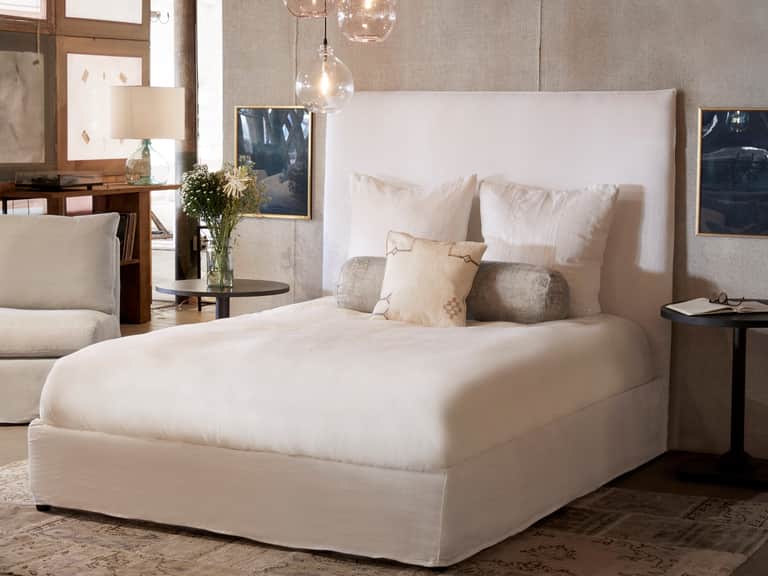
Cisco Home April Tall Bed
A statement piece with height and elegance, featuring a versatile slipcover option for evolving spaces. This bed combines FSC-certified wood with a refined silhouette that can anchor a master suite or a public-facing showroom with quiet sophistication.
Price: $4,710.00
Notes: Product selections are illustrative anchors for a broader discussion about sleep-friendly design. They symbolize how durable, responsibly produced furnishings can live in both private and public contexts, reinforcing a culture of rest in the built environment.
Policy angles and community partnerships
Designing restorative spaces is as much about governance as it is about material culture. Local policy can reinforce restful communities by:
- Encouraging school start times that align with adolescent circadian biology, reducing after-school fatigue and improving attention across the day.
- Allocating funds for acoustic improvements in public buildings, ensuring noise is managed rather than suppressed by sheer volume of usage.
- Mandating access to shade and seating in outdoor civic spaces, especially during peak sun hours, to encourage midday breaks and social-rest cycles.
- Supporting sleep health campaigns in collaboration with health departments, schools, libraries, and parks departments to raise awareness and provide practical resources for families.
In this framing, the public sphere becomes a steward of sleep health. Policies that encourage quiet hours, daylight-aware programming, and accessible rest areas position sleep not as private luxury but as communal resilience.
Closing thoughts: a city that rests well is a city that thrives
The relationship between sleep and public space is not ornamental. It is systemic. It invites designers, policymakers, librarians, park managers, educators, and residents to participate in a shared practice: shaping environments that acknowledge rest as a vital civic act. In time, the quiet corners of libraries, the shaded arcs of parks, and the welcoming lobbies of civic centers will become not merely refuges of breath and pause but engines of communal health—where every whispered conversation in a quiet zone, every comfortable seat under a tree, and every sunset-dimmed glow contributes to a city that sleeps better and wakes stronger.
The goal is modest in its rhetoric, ambitious in its reach: rest as infrastructure, care as design, and community as cure.